Expansive Clay, Bay Mud, and the Hayward Fault: What Bay Area Ground Does to Foundations
The East Bay sits on some of the most demanding residential soil in the country. Here’s what expansive clay, filled shoreline, hillsides, and a major fault mean for your foundation — and what good concrete work does about each.
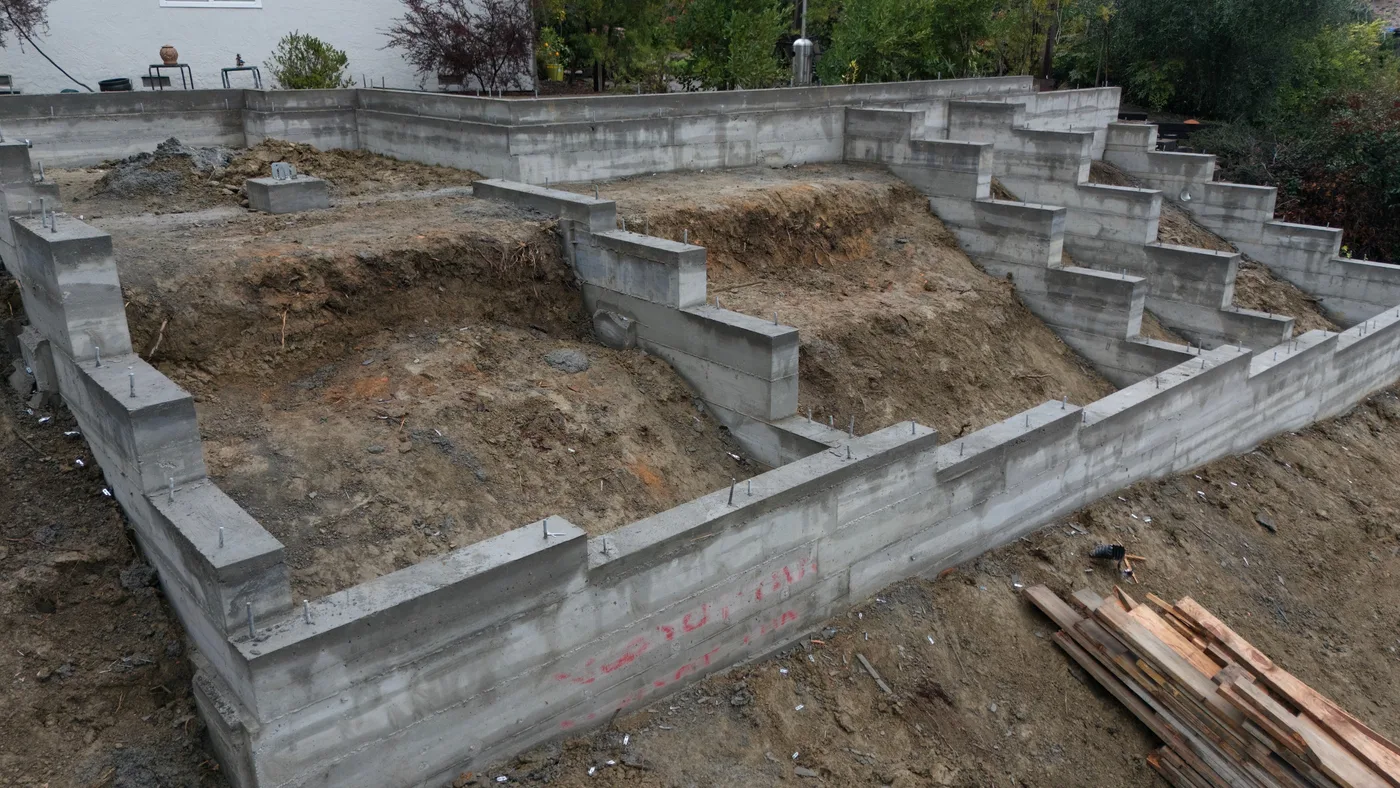
When a foundation in Richmond or Berkeley cracks, the concrete usually isn’t what failed — the ground moved. The Bay Area packs four distinct ground problems into one small region: clay that swells and shrinks with the seasons, soft mud under filled shoreline, hillsides that creep, and one of the most closely watched faults in the country running straight through the East Bay. Every one of them has a known engineering answer. This is what each looks like from the homeowner side.
Expansive clay: the slow-motion foundation killer
Large parts of the East Bay flats — Richmond, San Pablo, much of Berkeley, Oakland, and the inland valleys around Walnut Creek and Danville — sit on clay soils that behave like a sponge. They swell when the winter rains saturate them and shrink and crack in the dry summer, and that annual cycle pushes and drops whatever sits on top. It’s why old, shallow foundations in these neighborhoods develop stair-step cracks, sticking doors, and sloping floors a little more every year.
The fixes are unglamorous and effective: footings deep enough to bear below the zone that moves, more reinforcement than a benign-soil design would need, and — most underrated — drainage that keeps water from concentrating against the foundation in the first place. When a soils engineer’s report calls for a specific footing depth or rebar schedule on your project, that’s the clay being handled. We build exactly to it — it’s the heart of our foundation work.
Bay Mud and filled land near the shoreline
Closer to the water — parts of the Richmond shoreline, Emeryville, Alameda, and stretches of the San Francisco bayfront — the ground is often old bay mud or engineered fill placed over it. It’s soft, compressible, and settles under load, which is why structures there frequently need deepened systems: drilled piers or piles that carry the building’s weight down to competent material instead of floating it on mud. If your parcel is near a historic shoreline, expect the soils report to lead the design, and be suspicious of any bid that doesn’t reference one.
Hillsides: gravity never clocks out
The Berkeley and Oakland hills, Lafayette, Moraga, El Cerrito — a huge share of East Bay housing sits on slopes, and sloped ground moves. Loose surface soil creeps downhill over decades; cut-and-fill pads from mid-century construction settle unevenly; and water moving through a slope does more damage than water on flat ground.
Hillside concrete is therefore mostly anchoring: drilled piers down to stable material, grade beams tying them together, and retaining structures with real drainage behind them. On a steep hillside ADU we built in Lafayette, the drilled-pier foundation was the majority of the structural work — the slab everyone sees was the final step. That ratio is normal on Bay Area slopes, and it’s why hillside bids look different from flatland bids.
The Hayward Fault runs through the neighborhood
The Hayward Fault passes directly under the East Bay — through El Cerrito, Berkeley, Oakland, San Leandro, and Hayward — and the USGS has called it one of the most urbanized faults in the country. For homeowners this shapes concrete work in two ways. First, California restricts building directly on top of active fault traces (the Alquist-Priolo zones), which is a siting question your city planning counter can answer for your parcel. Second, and more commonly: everything built near the fault should be detailed for shaking — properly embedded anchor bolts, shear transfer between the house and its foundation, and reinforcement placed the way the engineer drew it. A foundation is your house’s connection to the ground; in the East Bay, that connection is a seismic component.
The soils report: the cheapest insurance in the project
A geotechnical (soils) report isn’t required for every project — the code mandates one on hillsides, where soil strength is in doubt, and in known expansive or hazard areas, and building departments have discretion beyond that. On a flat lot, an engineer can often design to the code’s conservative presumptive soil values and skip the report entirely, which is how many Bay Area ADUs get built. Where the ground is one of the four problems above, though, the report is the cheapest insurance in the project: it tells the engineer what the ground can bear and what it will do seasonally, and turns surprises into line items. From the concrete side, our job is the same either way: build precisely what the engineering calls for — footing depths, pier diameters, rebar schedules, embedments — and get every inspection signed. That’s what makes a foundation on difficult ground boring for the next fifty years, which is the goal.
Common questions
How do I know if my house sits on expansive clay?
Strong hints: hairline cracks that open in summer and close in winter, doors that stick seasonally, and dark soil that cracks into a dry mosaic by August. The definitive answer is a geotechnical report — and most East Bay flats and inland valleys should assume some expansive behavior until tested.
Do I need a soils report for an ADU foundation?
Not always. The building code requires a geotechnical report in specific situations — hillsides, soil whose strength is in doubt, known expansive-soil areas — and otherwise leaves it to the building department. Plenty of flat-lot Bay Area ADUs are approved without one, because the engineer designs conservatively to the code’s presumptive soil values instead. On slopes, near old shoreline fill, or where the plan checker questions the soil, expect one — and it’s worth having there anyway.
Can you build near the Hayward Fault?
Yes — the East Bay does it every day. California restricts building directly over mapped active fault traces (Alquist-Priolo zones), which is a parcel-by-parcel siting question. Outside those traces, the answer is engineering: seismically detailed foundations, anchoring, and reinforcement built exactly to the drawings.
My foundation has cracks — is the soil the reason?
Often, in this region. Uniform hairline cracks are usually normal curing; cracks that grow seasonally, stair-step through block, or come with sloping floors point to ground movement. A site visit can usually tell which category you’re in — and whether drainage correction, repair, or replacement is the right conversation.
Sources & further reading
Planning a concrete project?
We offer free estimates across the San Francisco Bay Area. Tell us what you’re working on and we’ll walk the site with you.
Request an estimate