A driveway is the hardest-working concrete on your property — parked on daily, seen by the whole street, shedding every drop of rain somewhere. We tear out and re-pour driveways across the Bay Area: clean gray, decorative color-and-score, and engineered hillside builds.
The crew that builds our foundations pours our driveways — and whether a driveway lasts thirty years is decided before the truck arrives: demo, grading, base, forms.
We replace driveways across the Bay Area, most often in the East Bay — see our work in Richmond, Oakland and Danville, or the full service area.
- Licensed C-8 · CSLB #1020281
- Richmond-based, Bay Area-wide
What a driveway replacement actually involves
The old slab comes out; a system goes back in. A complete bid covers all six.
Demo & haul-off
The old slab out and legally disposed — included, not a change-order surprise later.
Grading & base rock
Compacted subgrade and base — the layer that actually carries your car over Bay Area clay.
Forms & slope
Set so rainwater sheds away from the house, not into the garage.
Reinforcement
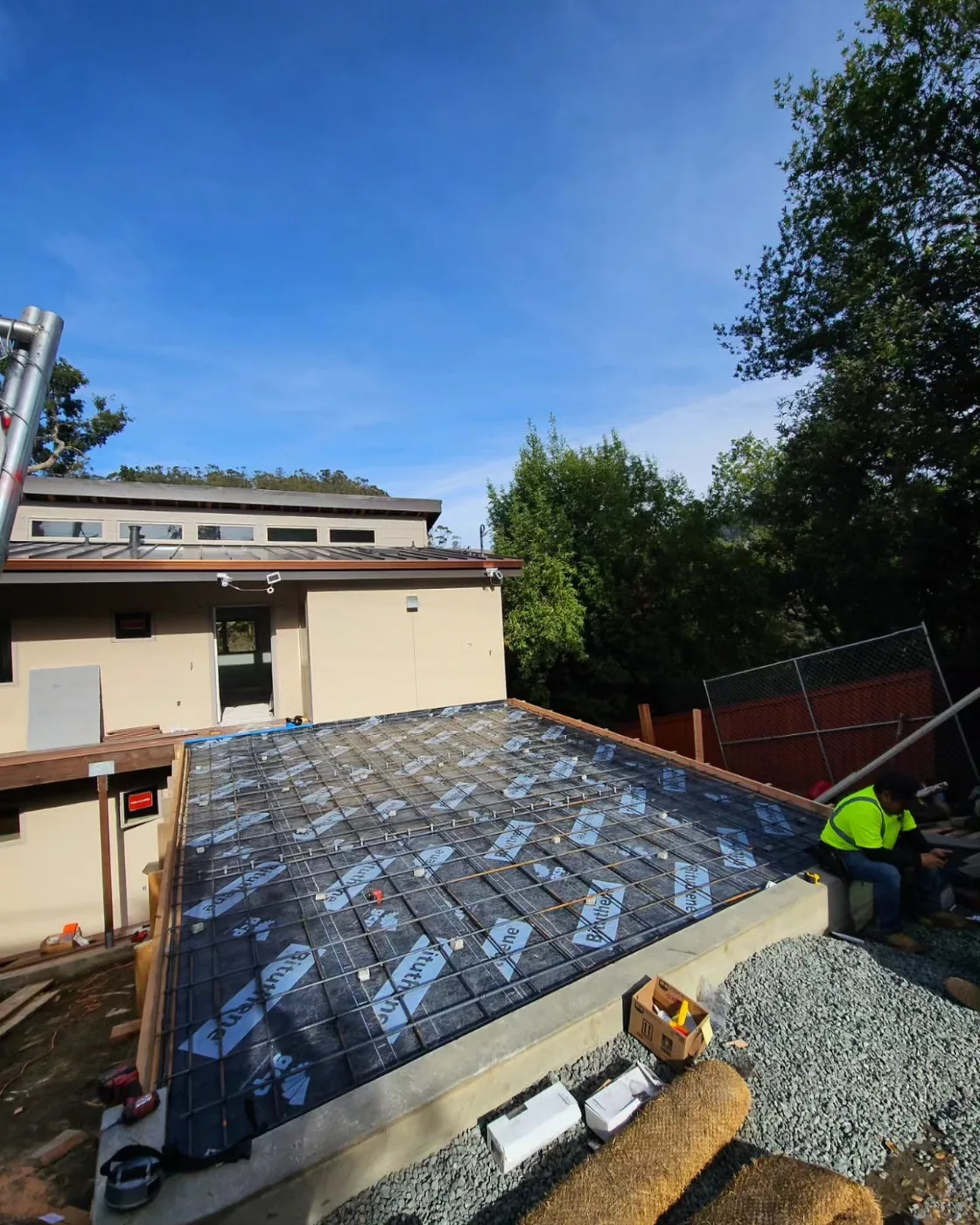
Rebar on chairs, mid-slab — where it actually holds cracks tight.
The pour
Chuted straight from the truck, or pumped where access is tight.
Finish, joints & curing
Broom or decorative finish, joints that control cracking — and about a week before you park on it.
About a week of site work; walkable in a day or two, drivable in about a week, full strength at 28 days.
Built for Bay Area lots
Steep lots & hillsides
Steep driveways need traction — coarse broom or heavy texture, scoring on the steepest runs — and water routed off the slab. Concrete beats asphalt and pavers on grade; the honest comparison.
When a driveway is a structure
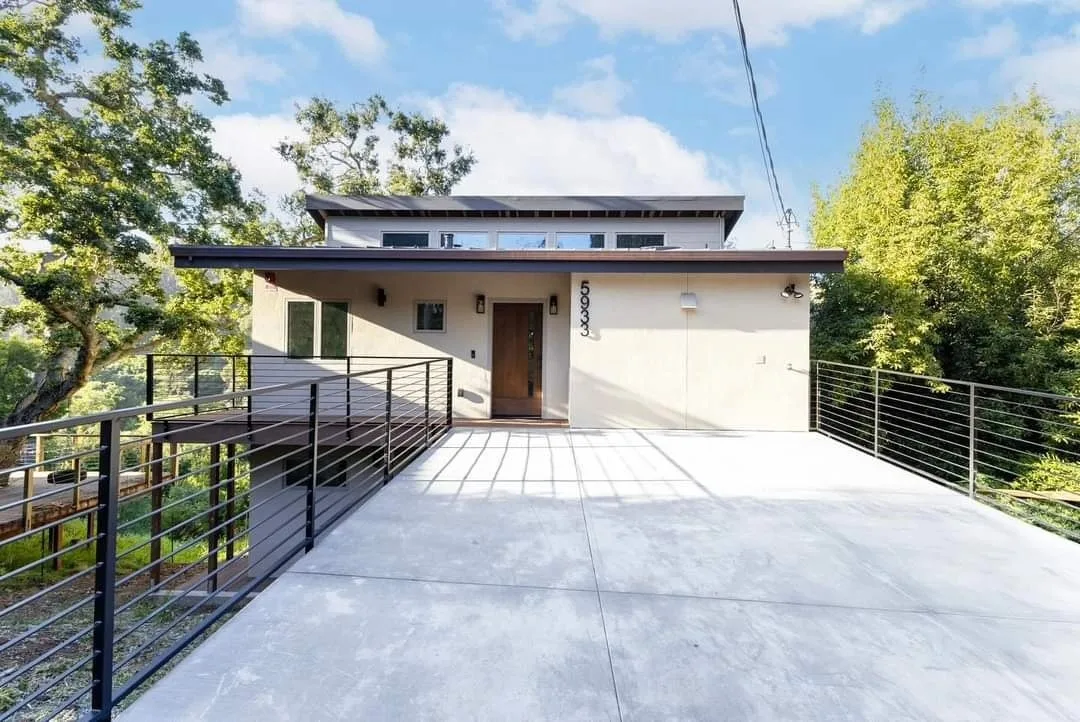
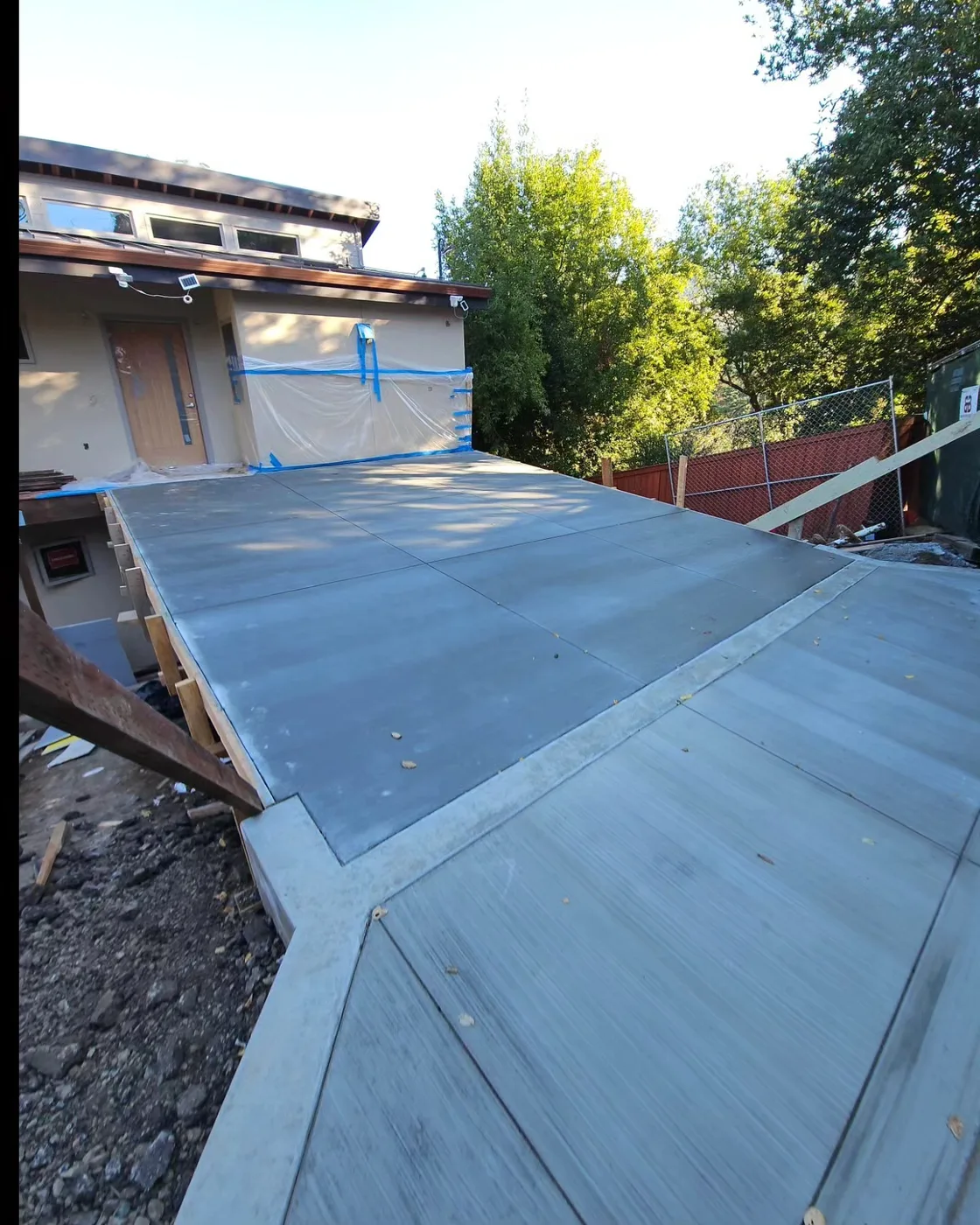
Sometimes a hillside driveway becomes engineering: the Richmond “bridge” driveway above is a suspended, waterproofed structural deck you park on.
Permits & the apron
The apron by the street is public right-of-way — permitted and inspected in most cities, especially curb cuts. We flag it during the estimate. Replacing the sidewalk or curb at the same time? That’s its own page.
Stormwater rules
Some cities cap new impervious surface, steering large driveways toward permeable sections or a ribbon design. A line item, not a panic.
Finishes: from clean gray to Spanish Gold
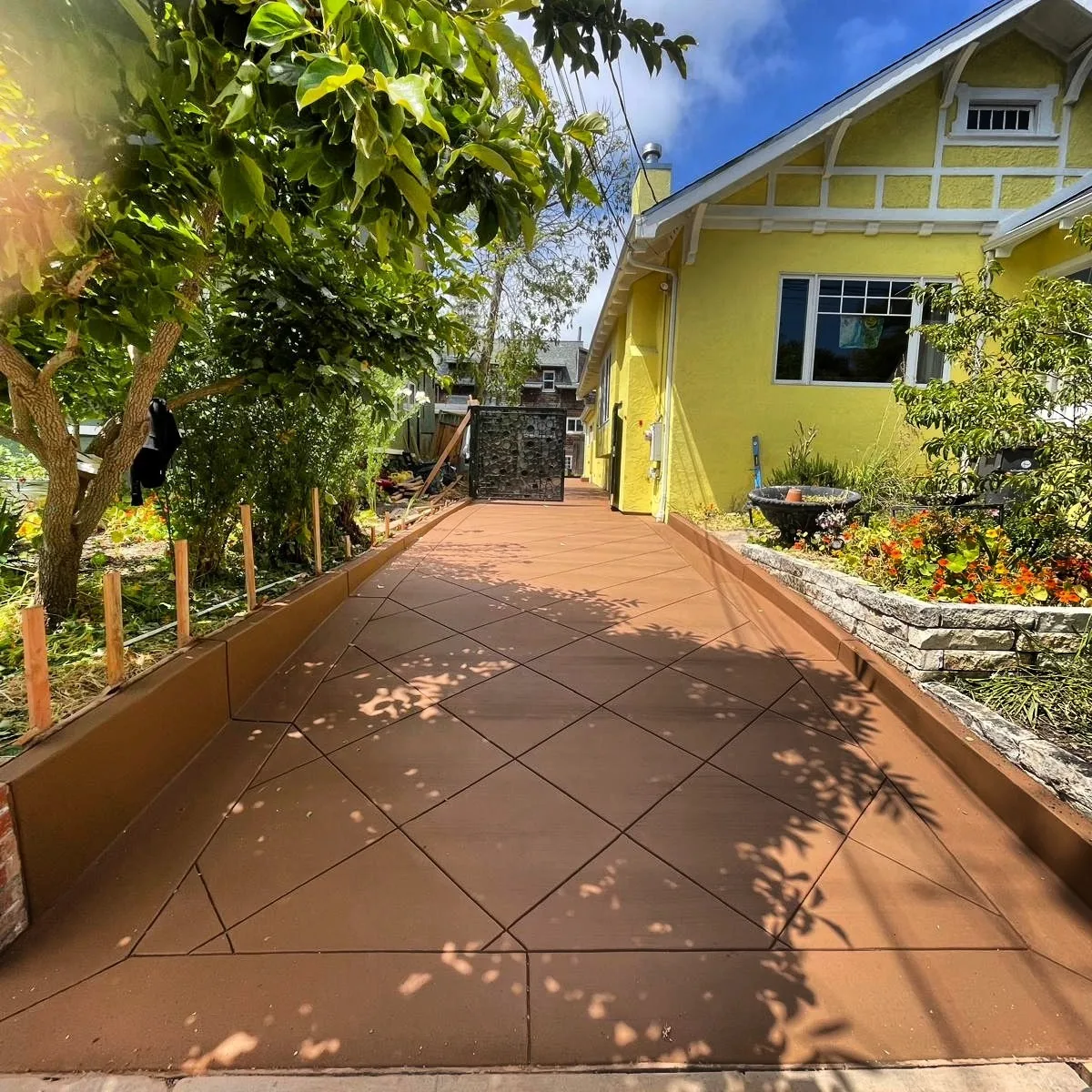
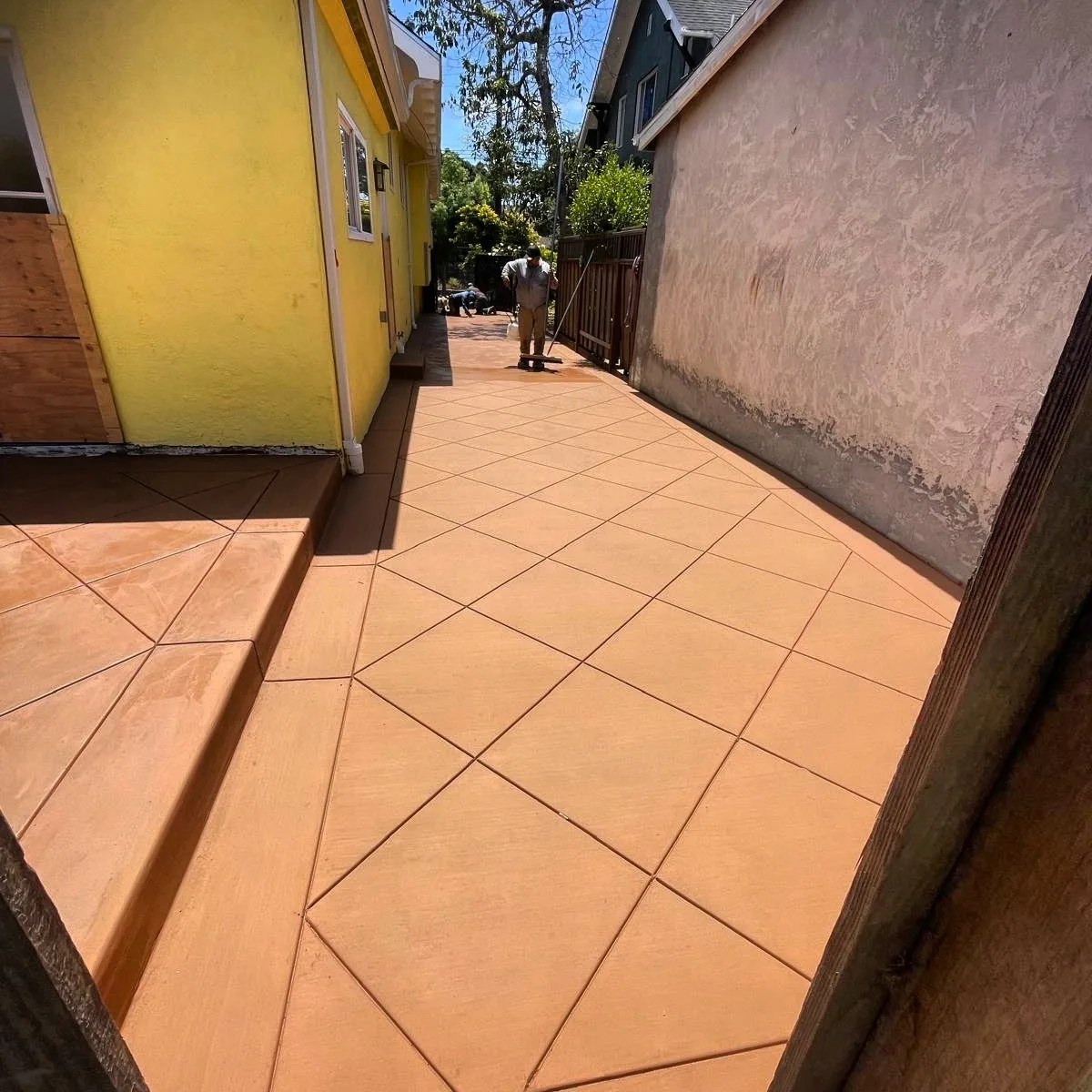
Broom finish is the standard — texture for traction, clean gray, ages well. From there it steps up: integral color mixed through the concrete, score patterns, exposed aggregate. Real examples beat swatches — see the flatwork portfolio.
What a new driveway costs in the Bay Area
There’s no price list because the site sets the price — demo, truck access, slope, base depth, drainage, finish. Our cost guide walks through the factors and why two bids rarely match, and our slab cost calculator gives a ballpark range for a straightforward pour, built from published industry figures.
What you get instead: a free, itemized estimate — base, rebar, thickness, drainage, demo, finish — that you can compare line by line against any other bid.
Driveway projects we’ve built
Oakland Gold Driveway & Patio
Oakland, CA
A decorative concrete driveway and side patio New Edge Concrete poured for an Oakland home in 2024, replacing the old plain gray driveway.
View projectRichmond Bridge Driveway
Richmond, CA
An elevated concrete “bridge” driveway New Edge Concrete built for a modern hillside home in Richmond in 2024, working with general contractor Burton…
View projectCommon questions
How long does a driveway replacement take?
Plan on roughly a week of site work for a typical residential driveway — demo, grading, base, forming, pour, and finish — though access and weather move that. Then the concrete needs time of its own: walkable in a day or two, but keep vehicles off it for about a week. Concrete reaches its design strength at about 28 days.
Do I need a permit to replace my driveway?
Frequently, yes — the apron between the sidewalk and the street is public right-of-way in most cities, and work there (especially a new or widened curb cut) is permitted and inspected. Rules differ between Richmond, Berkeley, Oakland, and San Francisco — our city-by-city permit guide breaks them down. We flag the permit scope during the estimate.
How thick should a concrete driveway be?
Four inches is the industry standard for a residential driveway slab, with thicker sections where heavier vehicles will sit. Thickness gets the attention, but the compacted base beneath the slab and rebar set mid-slab on chairs do at least as much to determine how long a driveway lasts.
Are hairline cracks in new concrete normal?
Yes. Concrete shrinks slightly as it cures, and fine surface cracks — crazing — are a normal cosmetic result on almost every slab, not a defect. Control joints exist to steer the larger shrinkage cracks into straight, planned lines. The cracks that matter are the ones that widen, offset vertically, or grow with the seasons: those mean the base or soil is moving, which is what the prep steps above are there to prevent. Our guide to Bay Area soil covers what this region’s ground does to concrete.
My driveway is cracked — can you resurface it instead of replacing it?
Usually not, honestly. Overlays and toppings exist, but when a slab cracked because the base or soil under it moved, a new surface bonded to it inherits the same movement. Replacement fixes the cause — the base — not just the symptom. A few photos of the slab will usually tell us which situation you’re in.
Is decorative concrete worth it over plain gray?
It depends what the driveway is for. Plain broom-finished gray is the durable, economical default. Integral color and score patterns cost more and turn the driveway into part of the home’s entry — the structure underneath is identical either way, so the choice is about curb appeal and budget, not durability.
Ready for a real number?
Send us photos and rough dimensions and we’ll put together a free, itemized estimate — no pressure, no guesswork off square footage. If the job needs eyes on the site, we’ll come out.
Request an estimate